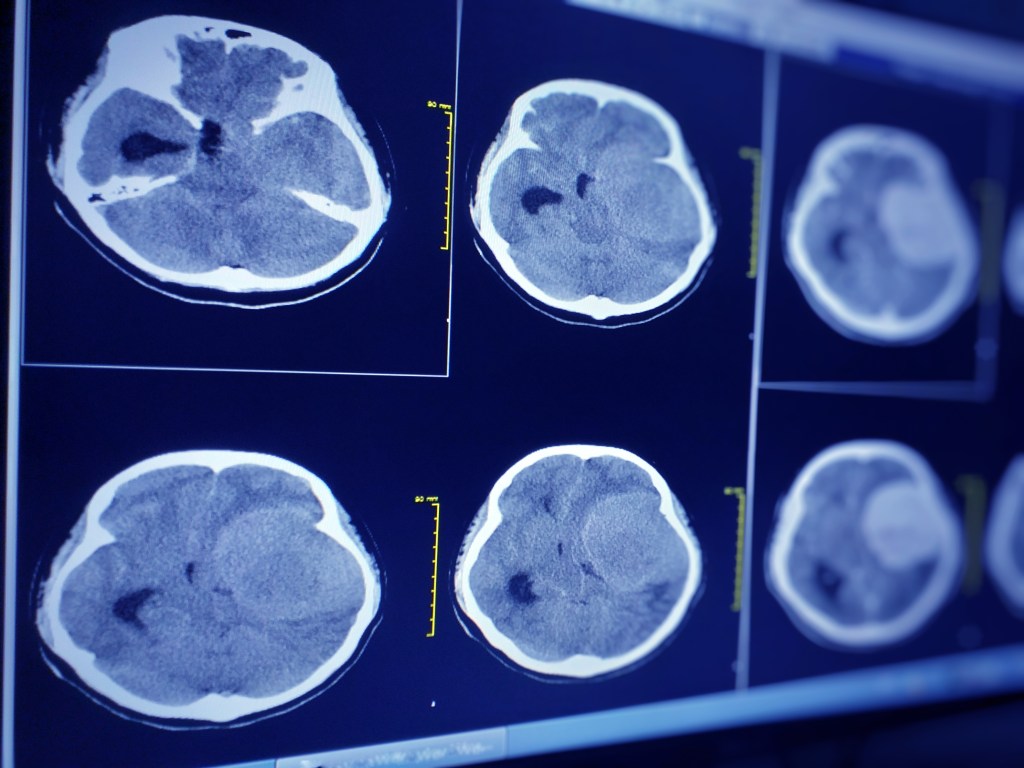
As defined by the National Institute of Neurological Disorders and Stroke (NIH), ‘a traumatic brain injury (TBI) refers to a brain injury that is caused by an outside source.’ The symptoms vary from person to person but commonly include loss of consciousness, headache, vision problems, and other neurological problems. TBIs are typically diagnosed by imaging tests like CT or MRI scans and are categorized into different severity levels: mild, moderate, and severe. In my case, I had a severe TBI.
I always thought of the brain as the motherboard for the body. It controls everything from our physical movement, emotions, organ function, etc. Without a functioning brain, we literally wouldn’t be able to live. So now think of what happens when a computer’s motherboard is damaged; it affects the whole operating system of the computer. Now transfer that same concept to the brain and body, except there’s one big difference: we don’t know much about the brain. Imagine getting an injury and not knowing how or if it will heal! That’s what it’s like living with a brain injury.
The symptoms aren’t fully understood because every case is different, and the long-term effects are still pretty much unknown. Even now, years after my injury, I still experience health issues that I never had before. Many of these symptoms are hard to pinpoint, especially since I was otherwise healthy. After countless doctor visits and medical tests, most of these lingering problems have been attributed to my brain injury.
When I was first hospitalized, I had hematomas (bleeding in and around the brain). The doctors had to shave the right side of my head and insert a device to relieve the swelling and bleeding. Later, I was diagnosed with neuropathy (nerve damage), GERD (acid reflux), and chronic headaches/migraines. I was prescribed gabapentin for neuropathy, but the side effects were unbearable, so I stopped taking it. Recently, I’ve started back on medication for my acid reflux because it was affecting my ability to eat and drink anything acidic. Thankfully, I’m feeling better physically now.
I take each day one at a time and have chosen to no longer live in fear. I’ve spent countless time researching whether my quality of life will improve (or decline). Much of the research left me more fearful than hopeful. The high risk of Alzheimer’s, dementia, Parkinson’s, loom large. But instead of worrying about the future, I’ve decided to focus on today.
Recovery is ongoing, and while it’s a journey with ups and downs, I’m optimistic about the future. Who knows? You might even see me running a marathon or two this year- proving that healing, though unpredictable, is very much possible with a brain injury. What keeps me going is the unwavering support of my family and friends, my faith in God, and the love I get from my daughter.
If you’re living with a brain injury or know someone who is, remember that recovery is different for everyone. Don’t compare your journey to anyone else’s. Some progress is better than no progress, whether big or small. Above all, stay hopeful, stay curious, and most importantly, stay kind to yourself.
With love,
-Kat
Credited Sources
National Institute of Neurological Disorders and Stroke. “Traumatic Brain Injury (TBI).” Www.ninds.nih.gov, National Institute of Neurological Disorders and Stroke, 15 Oct. 2024, http://www.ninds.nih.gov/health-information/disorders/traumatic-brain-injury-tbi.
CT Brain seven cm. diameter hyperdensity mass with lobulated surface at extra-axial lateral to lt frontal and temporal lobe. Free photo. (n.d.). vecteezy.com. https://www.vecteezy.com/photo/15763194-ct-brain-seven-cm-diameter-hyperdensity-mass-with-lobulated-surface-at-extra-axial-lateral-to-lt-frontal-and-temporal-lobe

 The Komeback Khronicles
Leave a comment